Reviewing Saving Lives One Shift at a Time for Embroidery
As a designer who has spent years digitizing patterns and testing them on everything from stiff canvas to delicate baby knits, I approach every new embroidery file with a critical eye. It is not enough for a design to look good on a screen; it must hold up under the needle. Recently, I evaluated Saving Lives One Shift at a Time, Health, a graphic asset that bridges the gap between digital print and stitched art. While this product is categorized under Crafts and Graphics, its potential in the embroidery world depends entirely on how we translate its visual weight into thread.
First Impressions and Visual Personality
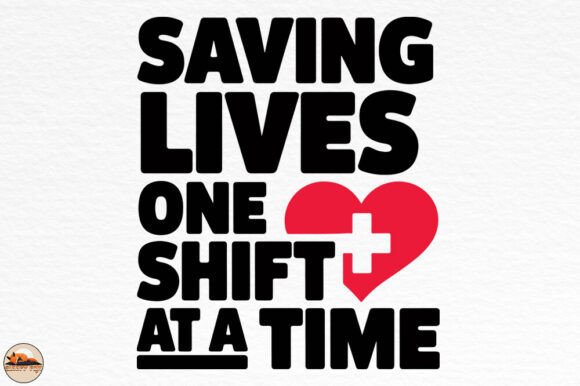
The phrase "Saving Lives One Shift at a Time" carries an inherent emotional weight. It speaks to resilience, dedication, and the quiet heroism of healthcare workers. Visually, the layout of this design suggests a balance between bold statement and readable clarity. When I first opened the files, I was looking for clean lines and sufficient spacing. In embroidery, tight kerning can lead to thread breaks or messy pull-outs, especially when using a satin stitch for lettering.
This design feels suited for projects that require a touch of professionalism mixed with personal pride. It does not scream for attention with chaotic elements; instead, it offers a structured, dignified aesthetic. For an embroidery project, this means the design relies heavily on font choice and line thickness. If the original graphic uses thin, wispy strokes, it may need significant adjustment before becoming a viable machine embroidery design. However, if the lines are robust, it translates beautifully into a fill stitch or a clean running stitch outline.
Real-World Application: The Custom Sweatshirt Test
To truly understand the value of Saving Lives One Shift at a Time, Health, I imagined a specific client scenario. A local nurse wanted a custom gift for her team after a particularly grueling season. She requested a high-quality sweatshirt embroidery piece that felt substantial but not bulky. This is where the design’s practicality comes into play.
Using the provided SVG and EPS files, I could easily resize the artwork to fit a standard 5x7 hoop. The scalability mentioned in the product features is crucial here. A design that loses integrity when resized is useless for a craft business. In this case, the clear vectors allowed me to adjust the size without pixelation, ensuring that the final finished product would look crisp. The mood it creates is one of solidarity. When stitched onto a heather grey fleece, the text becomes a badge of honor. Customers reacting to such items often feel a deeper connection to the brand or the giver because the message is tangible and durable.
Navigating Fabric and Stitch Challenges
Not every surface is friendly to detailed text. When working with Saving Lives One Shift at a Time, Health, you must consider the fabric texture. On a smooth cotton twill, such as that used for tote bag design or aprons, the stitches will lay flat and read clearly. However, on textured fabrics like terry cloth towels or fuzzy blankets, fine details can get lost.
I would advise caution when applying this to stretchy fabrics like jersey t-shirts without proper stabilization. The stitch density must be managed carefully. If the design is too dense, it can cause puckering, ruining the professional look of the handmade product. Conversely, if it is too light, the fabric might show through the letters. For dark fabrics, you must ensure high contrast in your thread colors. A white or light gold thread against navy blue scrubs fabric creates a striking, legible result that enhances the visual appeal of the item.
Additionally, curved surfaces like caps present a challenge. The distortion inherent in sewing on a curved brim can warp text. For a cap, I would recommend simplifying the design or using an applique design technique where the text is cut from fabric and stitched down, rather than filled entirely with thread. This reduces bulk and maintains readability.
Commercial Viability and Brand Consistency
For Etsy sellers and small shop owners, the versatility of this graphic is a major asset. It fits seamlessly into the niche of personalized gift items. Whether it is for holiday embroidery gifts for medical staff or year-round custom apparel, the theme is evergreen. The ability to modify the design allows for brand consistency. You can adapt the colors to match hospital scrubs or clinic branding, making it a valuable tool for B2B commercial embroidery projects.
However, selling finished items requires due diligence. Since the product includes PNG, EPS, SVG, and PDF files, it is primarily a graphic resource. To use it for machine embroidery, you must either digitize it yourself or ensure you have the right to convert it. Always check the license terms. If the license permits commercial use of the digital file, verify if it extends to physical goods. Many craft business owners overlook this step, leading to legal issues later. Assuming the license allows for physical production, this design can significantly boost buyer engagement due to its emotional resonance.
Practical Designer Notes for Execution
Before running this design on your main project, follow these steps to ensure quality:
- Test on Scrap Fabric: Always stitch out a test sample on the same material you intend to use for the final product. This reveals any tension issues or registration errors.
- Check Thread Contrast: Use a black and white mockup to see if the design holds up without color. If it disappears in grayscale, it may be too subtle for embroidery.
- Review Stabilizer Choice: For stretchy fabrics, use a cut-away stabilizer. For woven fabrics like tote bags, a tear-away may suffice, but hooping firmly is essential.
- Inspect Small Details: Zoom in on the vector file. Are there tiny dots or isolated points? These can cause thread nests in the machine. Clean up the file before digitizing.
- Confirm Hoop Size: Ensure the design fits comfortably within your hoop with adequate margin for the frame clamps.
In conclusion, Saving Lives One Shift at a Time, Health is a powerful graphic that, when handled with technical precision, translates into meaningful embroidered goods. It is not just a digital embroidery file or a simple print-ready PNG; it is a narrative tool. For the creative entrepreneur, it offers a chance to create products that speak to the heart of the wearer. By respecting the limitations of thread and fabric, and by leveraging the editable nature of the provided SVG and EPS assets, you can create standout pieces for your small shop product lineup. Whether it ends up on a baby embroidery onesie for a newborn nurse’s child or a sturdy embroidered patch for a work bag, the key lies in thoughtful execution.